How a small Riverina town reached across a closed border, defied the politics of two states and persuaded Sir John Monash to switch on its future.
Corowa, New South Wales · 1911 – 1927
Research by Ronald Dawe
Scroll to begin ▾
Prologue
A town that went dark at night
In the 1910s, light itself was a luxury a country council had to borrow heavily to buy.
From the 1880s, electricity had begun to light the streets and run the trams of Australia's cities. It was fed by local direct-current generators and coal-fired engines, in an unregulated scramble of power companies that grew large without rules, standards or much reliability. The states eventually saw the need for proper authorities and high-voltage alternating-current networks. Tasmania and Victoria led the way. New South Wales lagged behind, its progress blocked by the owners of private generators.
Before the state schemes arrived, regional towns had to fend for themselves by building their own coal, gas or steam plants. Governments would not fund these directly, so municipal councils borrowed the money and repaid it through charges on their ratepayers. For a small rural town, the sums were enormous.
Smaller towns without coal gas were most likely simply dark at night. Households lit their rooms with kerosene lamps or acetylene gas. So when the chance of electric light appeared, the uptake was rapid, for it was more convenient, and often cheaper, than anything that had come before. This is the story of one such town, and the family man who carried its hardest fight to the finish.
£6,500
First proposed for light & pumping in 1911, a vast sum for a small town
277
Miles of line from Yallourn to Corowa, among the longest on earth
2 Feb
1926, the night Monash switched on the lights
~2,000
Spectators gathered at the Soldiers' Memorial
A note on money As a rough guide, one pound (£) in 1925 would be worth roughly $50 in today's money, so the council's schemes ran into the equivalent of well over a million dollars.
Chapter One
The long wait for the current
Corowa first dreamed of electric light in 1911. It would take years of frustration before the lamps even flickered on.
The council first considered "electric lighting" in 1911, instructing its consulting engineer to draw up a combined lighting-and-pumping scheme. But money was tight and the work crawled. By 1912 the townsfolk had run out of patience. Businesses were reviving their old acetylene plants, and even the Anglican Church gave up waiting and switched from kerosene to gas.
The ArgusThursday, 3 August 1911
Corowa Lighting
At a special meeting of the municipal council, held last night for the purpose of further considering the electric light question, it was decided to instruct Mr Julius, consulting engineer for the scheme, to prepare plans and specifications of a scheme to submit to the department for approval. The scheme, which combines lighting and pumping, will cost about £6,500 and will include a 50-kilowatt engine and 300 ampere hour battery.
Albury Banner & Wodonga Express17 May 1912
District News: Corowa
Business men and others are apparently tired of waiting any longer for our electric-lighting scheme, and in quite a number of instances old acetylene gas plants are being made new… The council seems to be indifferent as to whether we have street lighting or no. From all appearances years will elapse before we get such facilities.
At last, late in 1913, the machinery was installed and the streets were wired. The contractors decorated the council chambers with floral designs, the band was engaged and the town prepared to be "transformed from darkness into light."
Corowa Free Press28 November 1913
The Electric Light
So, on the 20th December, Corowa will be transformed from darkness into light and the municipal council intends to celebrate the occasion by a fitting ceremony… Christmas Eve should, under the circumstances, be the occasion of a brilliant display in Sanger street, and no doubt country residents will muster in full force to witness Corowa in its new raiment of light.
The formal switching-on came in January 1914: a "smoke social" at the School of Arts, federal and state members invited. Yet only fifteen or twenty homes had been connected, and the crowd, the Free Press noted dryly, "took the whole business as if it were an everyday occurrence." The new plant, a suction-gas engine driving a direct-current dynamo, was expected to serve the town for twenty years.
It would not last ten.
So great has been the demand for current that it has been found necessary to consider increasing the generating capacity of the works.
The Benalla Standard · 21 January 1919
Chapter Two
The engines that exploded
Demand outran the plant. By the 1920s the town's lights flickered and failed, and twice the machinery blew itself to pieces.
Barely five years after installation, the works that were meant to serve Corowa for two decades were already overwhelmed. By 1919 the council needed another £4,000 for additional plant. The aging suction-gas engines, single-cylinder beasts that made gas from coal, were run flat out, day and night, seven days a week, until they began to break.
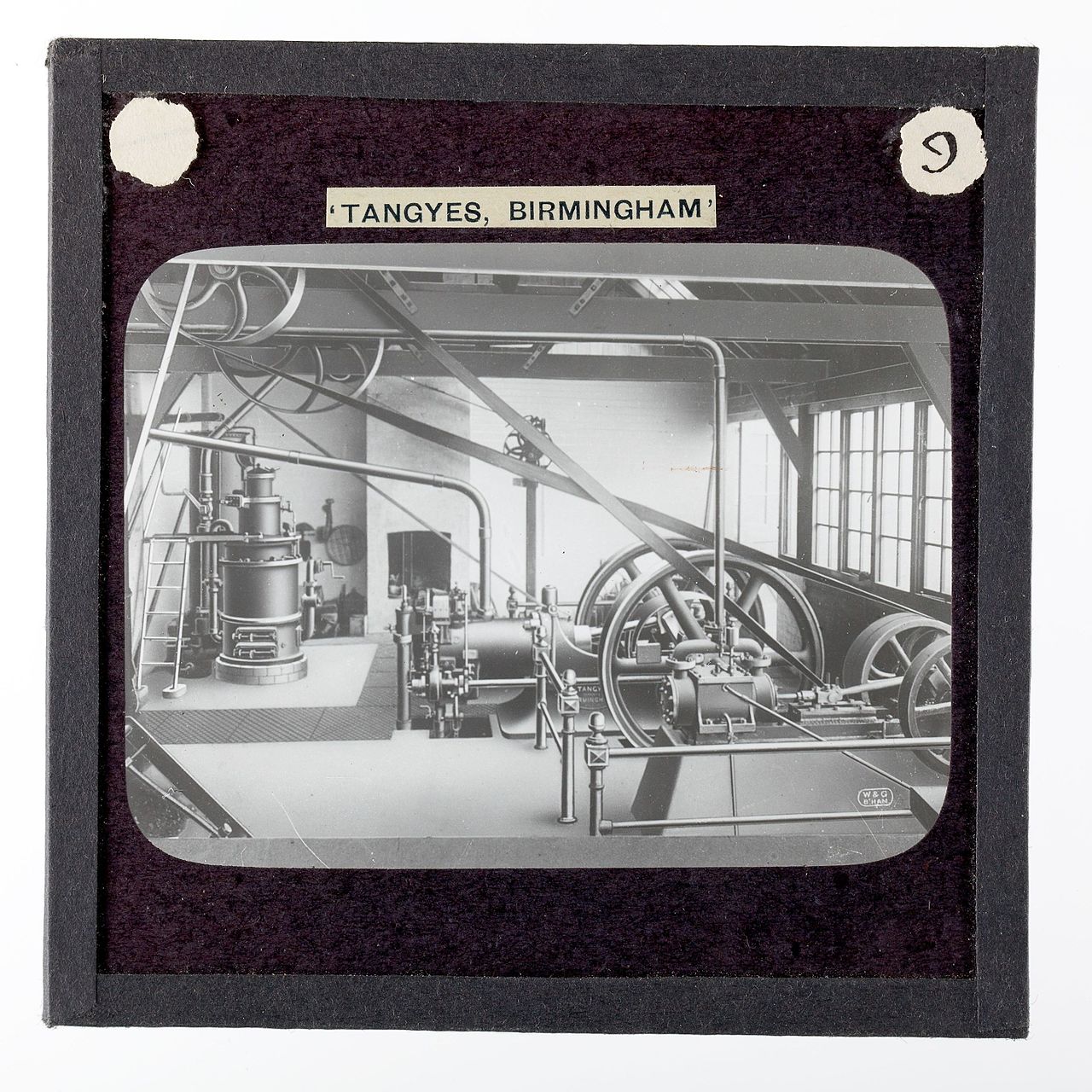
A Tangyes suction-gas producer plant and gas engine of the type installed in Corowa's powerhouse — the kind of plant that, worn out and overloaded, twice burst apart. Image courtesy of Museums Victoria (Public Domain), via Wikimedia Commons.
Albury Banner & Wodonga Express14 March 1924
Breakdown at Electric Station
Shortly after 2 o'clock on Friday afternoon a serious breakdown occurred at the municipal council's powerhouse, one of the 65 h.p. suction gas engines bursting. The combustion chamber, cylinder, water jacket, and piston were blown to pieces, and flying pieces of metal were hurled in all directions around the building. Fortunately nobody was hurt.
A year later it happened again, and this time the engineer himself was in the building.
The Benalla Standard5 May 1925
Electricity Failure
The chief engineer and electrician, Mr H. Grimmond, was on duty at the time… hearing a knock develop, he hurried in to see the cause. He shut off the gas, and as he was doing so, he was struck on the left shoulder by parts of the engine. Immediately there was a terrific crash. The whole of the combustion chamber and main casting of the jacket were blown to pieces… for over an hour the town, which was full of visitors, was in darkness.
From the family research Mr Grimmond very likely deserved a gallantry award as well as his later pay rise. He was nearly killed by flying metal from an exploding engine on two separate occasions, yet kept the worn-out plant running so the town would not go dark.
This was the crisis the council faced: a failing plant, a frightened town and the knowledge that converting the whole system to alternating current, replacing every motor and meter in Corowa, would cost a fortune the ratepayers could ill afford. Into this difficulty stepped a relatively new alderman with a Victorian idea.
The Cast
Who's who in the drama?
A visionary mayor, a tireless state member, a long-suffering engineer and a famous general.
E.J.D.
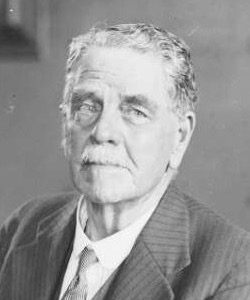
Ald. E. J. Dawe
Mayor of Corowa · 1925–27
He moved from Victoria in 1920 and was elected alderman in 1922. As Mayor he championed the bulk-supply scheme and welcomed Monash to switch on the lights. His 1948 obituary credited him with launching one of Corowa's largest-ever projects.
Hon. R. T. Ball
Member for Corowa · State Minister
State member for the seat of Corowa and New South Wales Minister for Public Works and Railways. The council turned to him to carry their case across the border. The family research credits him as indispensable: without him, it argues, state bureaucracy would have stopped the project.
H.G.
Mr H. Grimmond
Council Electrical Engineer
The man who kept the dying direct-current plant alive through breakdown after breakdown, and twice survived an engine exploding around him. Praised by the Mayor for "loyalty and unselfish attention."
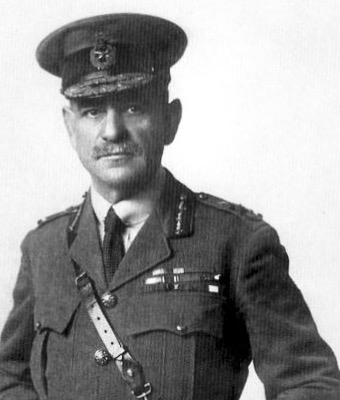
Sir John Monash
Chairman, State Electricity Commission of Victoria
The celebrated WWI general turned head of Victoria's electricity scheme. He travelled to Corowa to personally switch on the current and, with a customs-post childhood memory of the border, gave the night its emotional weight.
Chapter Three
A current across the border
Why build a costly new plant when reliable hydro power was being strung up just across the Murray, in another state?
In December 1922 Alderman Piggin put the radical idea to council: rather than saddle the community with a £30,000 debt for a new plant, why not couple Corowa to Victoria's great Morwell or Sugarloaf schemes, whose current would be available in two or three years? Alderman Dawe seconded the motion. There was just one problem, and Alderman Chivell named it instantly.
Victoria will have to amend her constitution before she can serve another State in the manner suggested.
Ald. Chivell · Corowa Municipal Council, December 1922
He was right. Victoria's legislation forbade the Commission from selling current outside the state, and the reply, when it came in January 1923, was blunt: the law prevented supply to Corowa, and the towns nearby would not be served for three or four years anyway. Disheartened, the aldermen turned back to plans for their own new steam-driven plant, a scheme estimated at over £21,000.
The Sydney Morning Herald16 October 1923
Corowa's Electrical Scheme
The plant is to consist of two high-powered steam engines operating two 150-kilowatt sets directly coupled to alternating generators… The scheme, when completed, is estimated to cost £21,400. The council resolved to apply to the Governor for permission to borrow £22,000 for the purpose of making extensions to its electricity supply works.
But unbeknownst to the aldermen, the cogs of interstate diplomacy were still turning. The Border Railways Act of 1922 had established a principle: that border towns should be able to receive benefits of transport and trade from a neighbouring state without obstruction. If Victoria could run railways into New South Wales, why not electricity? In November 1923 the town clerk, in Melbourne, read in the press that the Commission might reconsider. He went straight to its office.
Corowa Free Press20 November 1923
The Electricity & Water Supply
My first question was: "Why did the Commission say - less than two years ago - that it could not supply any place outside the State of Victoria?" … "That was the policy of the Commissioner until recently when the Government took the view that the Border Railways Act had established a principle that border towns should be enabled to receive benefits of transportation, etc., from a neighbouring state." The Premier of Victoria had informed the Commissioner that Parliament was prepared to authorise the delivery of electrical energy to Corowa.
The door had opened. In January 1924 the Commission laid out its terms: bulk supply from the Yallourn power station, carried north on a new transmission line, at a guaranteed price and even an offer of second-hand engines to keep the old plant limping along until the change-over. Corowa would be one of the very first New South Wales towns to be hitched to Victoria's grid.
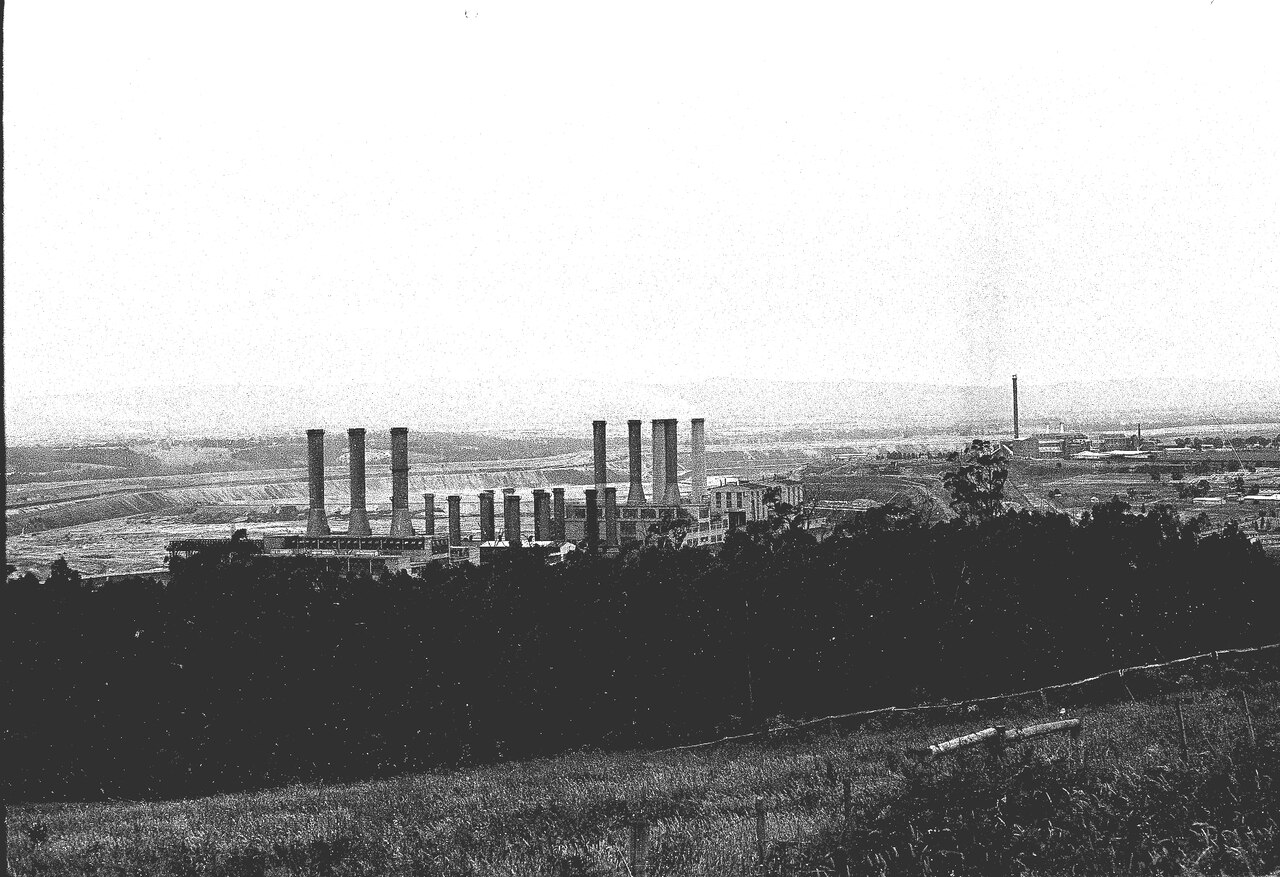
The Commission's line marched north over hills, valleys and forest, 277 miles from the Yallourn brown-coal fields to the Murray. Yallourn Power Station, Latrobe Valley. Photo: Michaeldistel, CC BY-SA 4.0, via Wikimedia Commons.
The Road to the Switch
Fifteen years in fifteen steps
From the first proposal to the night the memorial blazed with light.
1911
The first dream
Council instructs its engineer to plan a £6,500 lighting-and-pumping scheme.
December 1913 – January 1914
The lights come on
A suction-gas DC plant is switched on; only ~15–20 homes are connected at first.
1919
Already outgrown
Demand outruns the plant; another £4,000 is needed for more capacity.
December 1922
A Victorian idea
Ald. Piggin proposes connecting to Victoria's schemes; Ald. Dawe seconds.
January 1923
The door slams
Victorian law forbids cross-border supply; council reverts to a £21,400 local plant.
November 1923
The door reopens
The Border Railways Act changes everything; the Commission agrees to consider supply.
January 1924
Terms on the table
Bulk supply from Yallourn offered at a guaranteed price, with interim plant help.
1924–25
Engines explode
The worn-out DC plant bursts apart twice; engineer Grimmond is struck but survives.
June–July 1925
The money is borrowed
Council borrows £12,500 to convert from direct to alternating current.
Late 1925
Poles and wires
Transmission line and 40-ft poles march towards Corowa; work camps form nearby.
2 February 1926
Monash switches on the lights
Before ~2,000 spectators, Sir John Monash floods the Soldiers' Memorial with Yallourn light.
Chapter Four
A council under fire
As the old plant faltered, the local press turned the changeover into a public brawl.
The wait was agony. Through 1925 the engines were kept "running 24 hours daily and seven days a week," the battery scrapped, a ton of fuel burned each day and customers complained the daytime "juice" was so poor it was almost impossible to work by. The Corowa Free Press sharpened its pen against the council; the Corowa Chronicle defended it. The feud spilled into the council chamber itself.
The Corowa Chronicle16 January 1926
Corowa Municipal Council
Ald. Sammons said that during the period councillors had been through a very trying time… It was bad enough to have a disgruntled section adversely criticising the work of the councillors who were not being paid for it, but when that section were led by a section of the Press by a series of articles and comments belittling the work of the council, sneering and making cynical allusions to the council's efforts. It said little for that paper's loyalty to the town.
Yet even as the criticism flew, the work was racing ahead. The Commission's gangs, the papers admitted, "accomplished wonders since they crossed over into N.S.W. territory," working early and late, Saturdays and even Sundays. Portions of the town were already coupled to the new mains, glowing with "a beautifully clear and uniform light."
Hats off, Corowa, to the Victorian Electricity Commission!
Corowa Free Press · 2 February 1926
The Switching-On
The night the memorial blazed
2 February 1926 · 9 o'clock · the Soldiers' Memorial, Sanger Street
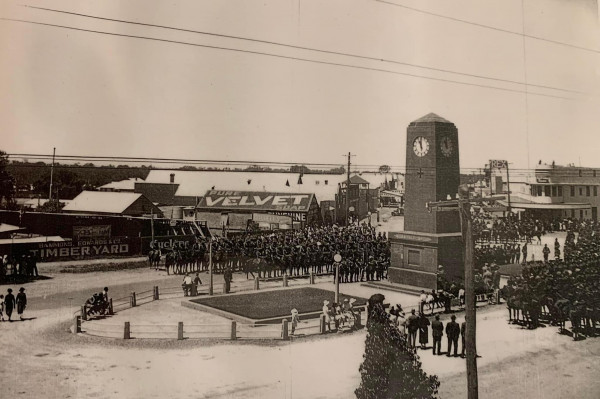
So great was the public interest that some two thousand people gathered in the warm February dark. The Mayor, Alderman Dawe, stepped onto the base of the war memorial alongside Sir John Monash and the mayors of Albury and Wangaratta. The current, Monash told them, had been generated from the huge brown-coal deposits at Yallourn, some 290 miles away. It was carried over a transmission line that the newspapers put at 277 miles, among the longest in the world.
Then he performed the simple, all-important act, and the memorial was flooded with light amid rounds of applause. Monash thought it deeply fitting that Corowa had chosen to associate the ceremony with its war memorial.
Sanger St War Memorial archival image - from Dedication ceremony of the Corowa War Memorial Clock on September 12, 1922. Photograph provided by Corowa RSL sub-Branch.
"You will be pleased to know that I am not altogether a stranger to Corowa, for it was on my journey to and from school in the days when the customs officers stood guard on the bridge… I could always remember the awe I experienced at the sight of the officer, but now those days are gone."
He congratulated the residents on "this historic day in the career of the town," declaring that from that day Corowa had been given a new life, and that the 2nd of February 1926 would always be remembered. At the official dinner that followed, Monash returned the warmth to the Mayor, noting that Dawe, too, had come from Victoria, "so it was not only electricity they got from Victoria."
Epilogue
A new life for the town, and a quiet legacy
Corowa became a model: the first town in New South Wales to standardise its supply, and a doorway for the whole Riverina.
The change was immediate and practical. With current at just twopence a unit, electric cooking, heating and cleaning became "an economically sound proposition." The council fitted out a showroom in the chambers where housekeepers could inspect ranges and vacuum cleaners, and offered to wire any home in the district. Sanger Street, lit by nine 1,000-candlepower lamps on neat 40-foot poles, became "one of the best illuminated streets in any country town in the state."
The Argus3 February 1926
Yallourn Power in Corowa
There are at present 560 buildings in the municipality, and of these more than 400 are already supplied… Corowa is the first town in New South Wales to take this important step in standardising its supply. Sir John Monash said the state undertaking had come into being as far as Corowa was concerned. The same was true of about 70 towns in Victoria, and the number was steadily increasing.
Other Murray River towns now lined up to be connected; New South Wales' own hydro projects were still many years away. And at the centre of it all stood Alderman Dawe, re-elected Mayor that December despite a strangely apathetic poll, his fellow aldermen lining up to defend a man who "worked without showing it." A year later, arguing to hold the rates steady, he summed up the whole struggle in a few plain sentences.
Last year we did not have enough light to see from one room to another; we were not sure of getting enough water to have a wash with, or to boil a kettle; and we had terrible roads. We have overcome the light difficulty; the water trouble is over; and we bid well to overcome the road question. Are these things not worth something, gentlemen?
Ald. E. J. Dawe · Corowa Chronicle, 12 November 1927
Dawe served as alderman for only six years and as Mayor for three. Perhaps, the family research reflects, he felt that what he had achieved in that short time was service enough to his community, after the sacrifices of the recent war. The achievement might seem unremarkable today, until you remember the state politics, the interstate rivalry, the exploding engines and the feuding press it had to survive. That it succeeded at all was a matter of vision, teamwork and stubborn civic leadership.
Help Us Get the Record Right
Submit a correction
Information provided is based on archival records and as such may be incomplete or incorrect. Please contact us if you have any corrections, or relevant photos, articles etc that you would like considered for inclusion on this site.